A practical guide to choosing sound, lighting, DJ equipment, LED screens, staging, lasers and technicians for a Halloween event venue.
September 21, 2026
Halloween AV hire is often sold as a list of speakers, lights and effects. That is backwards. Start with what guests need to see and hear, what is happening in the programme and what the venue will allow. The equipment list should come after those decisions.
A small private party may need a compact sound system, lighting and DJ setup. A corporate event might add wireless microphones, an LED screen and a stage. A nightclub or outdoor event may need more sound coverage, programmed lighting, lasers and technicians on site throughout.
This guide explains the parts of a Halloween AV setup and the questions that decide what your venue actually needs. For a tailored proposal, see Halloween event hire and production from Beatz Hire.
Send your supplier these details before asking for a package:
The same audience number can produce different answers. A seated dinner needs clear speech and good screen sightlines. A standing Halloween party needs controlled low-frequency sound and dancefloor lighting. A product reveal needs timed content, a stage position and rehearsed cues.
You know the exact equipment required, have a competent person to install and operate it, and the event has few live changes. See the Beatz Hire dry hire service.
The setup combines several systems, the access window is tight, there are speeches or performers, or someone needs to operate sound, lighting and content during the event.
Choose equipment for coverage, visibility and control. A longer kit list does not fix a weak room plan.
These are planning prompts, not fixed packages. The venue and programme can move an event into a different category.
A compact indoor event may use two main speakers, subwoofers for a music-led party, a small DJ setup, uplighting and a few controlled dancefloor fixtures. Add one or two microphones if there are speeches. A low DJ riser may help in a flat room.
Coverage becomes more important. The system may need larger main speakers or additional positions, stronger subwoofer support, wireless microphones, a defined lighting rig and a stage or DJ platform. An LED screen may be useful for welcome content, schedules, awards or branding.
Expect a designed sound system rather than a simple speaker pair. Plan the DJ booth, monitors, stage, lighting control and screen sightlines together. A sound or lighting technician may need to remain throughout the event. Nightclubs should be checked against the DJ rider and existing house system.
Audience area, speaker positions, stage location, monitoring, screen visibility, cable routes and technical staffing need a joined plan. For outdoor events, weather, wind and covered working areas also affect the specification.
Never rely on these ranges alone. A long narrow room, low ceiling, multiple connected spaces or strict sound limiter can change the solution.
Main speakers carry music and speech to the audience. Their position and coverage pattern matter more than a headline wattage figure. The aim is for guests at the back and sides to hear clearly without excessive level at the front.
Subwoofers carry low frequencies and are important for DJs and dancefloor-led events. The number and placement depend on the room, audience and venue limits.
List every host, speaker and performer. Confirm whether they need wireless handheld, headset or wired microphones. Add a backup where the programme depends on speech.
Someone needs to control microphone, music and video levels. If the event includes walk-on music or timed audio, include every cue in the running order and store a backup copy.
The DJ needs to hear a local monitor signal that can be controlled independently. Do not assume the main speakers are enough from behind the booth.
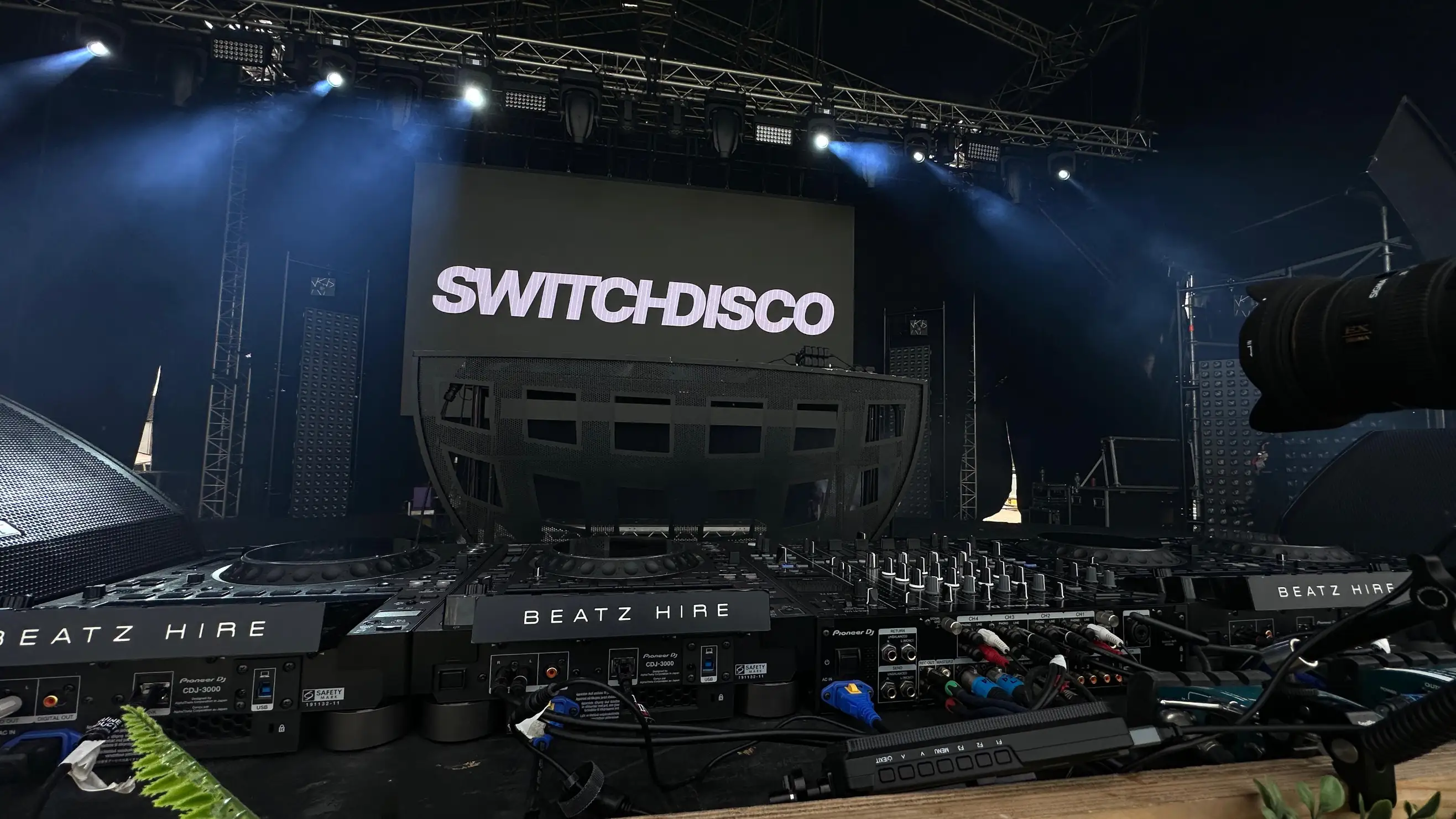
Ask the DJ for a current rider. Confirm decks, mixer, booth dimensions, monitors, microphone and connections. Club-standard examples include Pioneer CDJ-3000 players with a DJM-A9 or DJM-V10 mixer, but the correct model is the one agreed with the performer and organiser.
If you need the DJ as well as the equipment, view our DJ hire service.
Uplighting changes walls, columns and architectural features. It can carry a restrained colour palette through a hotel, office or private venue without filling the floor with equipment.
Moving heads can light a stage, create texture and add movement to a dancefloor. Programming matters. A few well-positioned fixtures with planned cues can look better than a larger number left in an automatic mode.
Guests should be able to see faces during speeches, awards and performances. Check how the light will work for photography and video as well as the room.
Halloween atmosphere should not hide steps, exits, registration or access routes. Keep practical areas visible and coordinate with the venue.
Lasers suit some club nights, university events and headline DJ sets. They are not automatically the right choice for every room. A competent technician should plan the effect around the venue, audience areas and operating conditions, and obtain venue approval where required.
For a small room or a programme built around speeches, moving lights and carefully timed colour changes may be the better use of budget.

An LED screen is useful when guests need to see content clearly or when the screen is part of the visual design. Common uses include:
Confirm the screen size, aspect ratio, pixel dimensions, position, audience distance and content operator. Test the actual files before the event.
A stage can improve sightlines and give the programme a clear focus. It may be a small presenter platform, DJ riser, band stage or covered outdoor structure.
Size it around the people and equipment using it. Include steps, handrails and accessible routes where required. Check the venue access route and installation time before agreeing the final dimensions.
Staging, screens, speakers and lighting positions affect one another. Treat them as one room layout, not separate supplier decisions.
A technician is worth including when the event relies on live decisions or when the equipment must be installed and checked by a competent person. Typical roles include:
A smaller event may combine several tasks into one role. A larger programme may need separate operators. Ask the supplier to name the roles and hours in the quote.
A useful quote should show what is included rather than hiding everything inside one package name. If budget is limited, ask the supplier which elements affect coverage, safety and guest experience first.
Ideally, confirm the production at least two weeks before the event. Halloween dates can book quickly, so earlier is safer for larger setups or specific DJ equipment. Same-week support may still be available depending on equipment and technicians.
For an accurate quote, send the date, venue postcode, guest number, room plan, access hours, running order and every performer rider.
Do not start with a generic package and force it into the room. Start with the venue, audience and programme, then select the sound, lighting, staging, DJ equipment, LED screens, lasers and technicians that solve the actual requirements.
Beatz Hire supports Halloween events within a 90-minute drive of Reading, including much of Berkshire, Oxfordshire, Buckinghamshire, Surrey, Hampshire and West London. Send our production team your event brief for a tailored quote.
Have a question or ready to get started? Let us know what you need, and our team will guide you every step of the way to make your event exceptional.
Reach out to us directly via email or phone—we’re here to assist you with any inquiries or bookings.
Stay connected and see our latest events, updates, and behind-the-scenes moments.


