Hotel conference suites come with restrictions, hidden costs, and layout challenges that can catch organisers out. This guide explains how to plan AV properly, what to check with the venue, and how to avoid last-minute issues on the day.

January 31, 2026
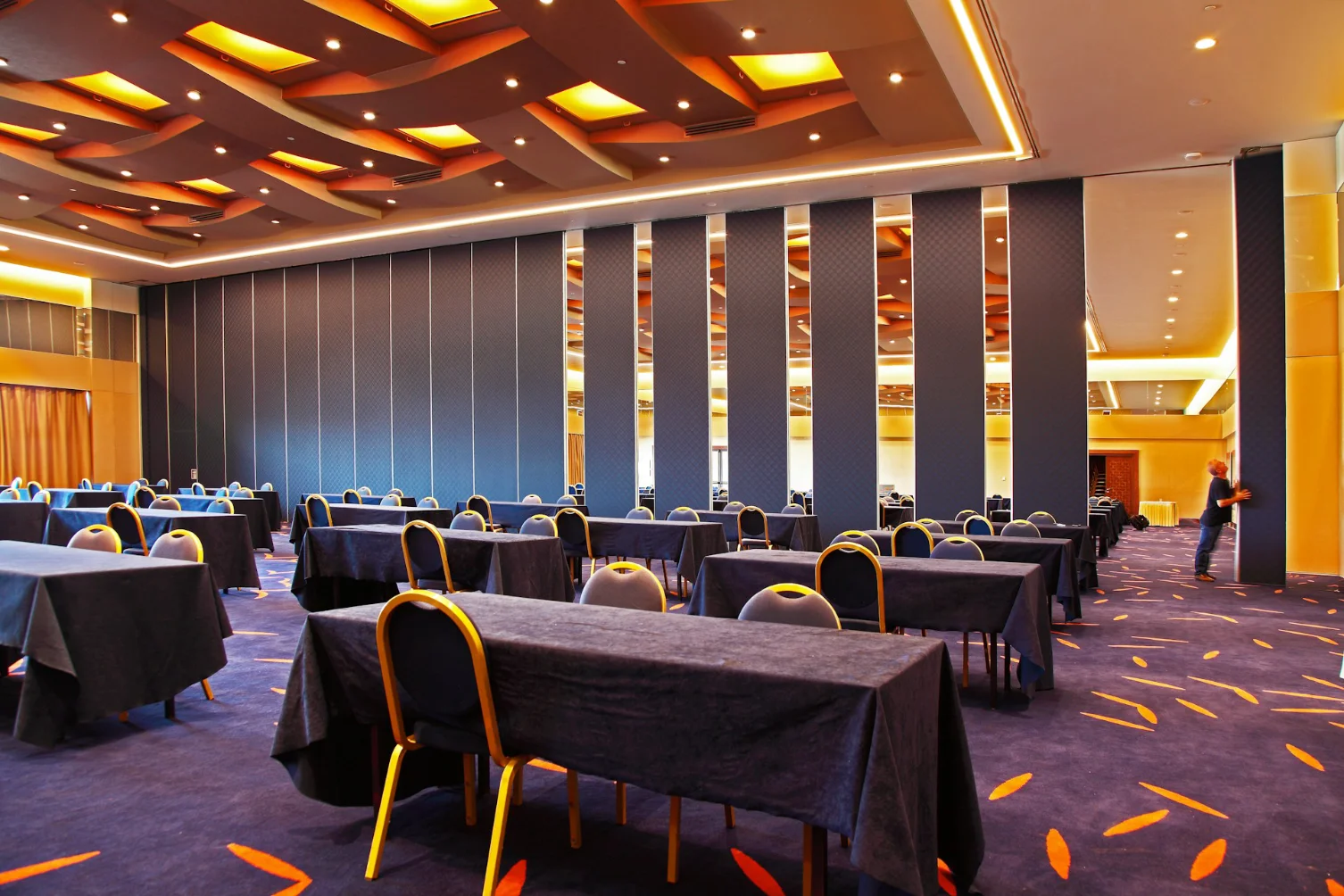
Hotel conference suites look simple on paper. Four walls, a ceiling, a screen at the front. In reality, they come with fixed layouts, access rules, and AV policies that can limit what you can do.
Unlike conference centres, hotels are built for many uses. A room used for a wedding one night might host a board meeting the next. That means:
If you don’t plan around these early, AV becomes stressful and expensive.
Before choosing microphones or screens, get clear on the room itself.
Ask the venue for:
A long, narrow room needs a different audio and screen setup than a wide room. Guessing leads to poor sound coverage and blocked sightlines.
Hotel AV planning gets much easier when the format is locked.
Be clear on:
Each change adds technical requirements. A panel with five speakers needs a different mic and mixing setup than a single keynote.
If people cannot hear clearly, nothing else matters.
What most hotel conferences actually need
Hotel rooms often have hard surfaces that cause echo. Good speaker placement and tuning matter more than buying “bigger” speakers.
Your slides should be readable from the back row without effort.
Consider:
For many hotel suites, a projector and screen work well. LED screens are useful in bright rooms but often unnecessary for standard conferences.
Conference lighting should support visibility, not distract.
Most hotel conferences only need:
Complex lighting rigs are rarely needed unless the event is being filmed or streamed professionally.
This is where many organisers get caught out.
Hotels often:
Before booking, ask:
Sometimes in-house AV is fine. Sometimes it’s overpriced for basic setups. The key is knowing your options early, not on the invoice.

Ask these before confirming AV:
If the answers are vague, push for clarity.
These come up again and again:
Most AV issues are planning issues, not equipment failures.
If your event has:
Then AV is not the place to cut corners or improvise. A calm, well-planned setup with on-site support is usually cheaper than fixing mistakes under pressure.
Next step:
Once you know your room layout, guest count, and speaker format, an AV team can recommend exactly what you need, without padding the setup or overselling kit.
Have a question or ready to get started? Let us know what you need, and our team will guide you every step of the way to make your event exceptional.
Reach out to us directly via email or phone—we’re here to assist you with any inquiries or bookings.
Stay connected and see our latest events, updates, and behind-the-scenes moments.


