How to choose a festival stage using the audience, performers, site, access, ground conditions, production requirements and realistic budget.
September 15, 2026
Choosing a festival stage sounds simple at first.
Pick a size, book it, and you’re done.
That’s what most people think, until they realise the stage affects almost everything. Sound, visibility, crowd flow, safety, and how professional the event feels all come back to that one decision.
Get it right, and the event feels organised. Get it wrong, and it shows immediately.
This guide breaks down how festival stage hire actually works, what you need to think about, and how to avoid the common mistakes that catch people out.
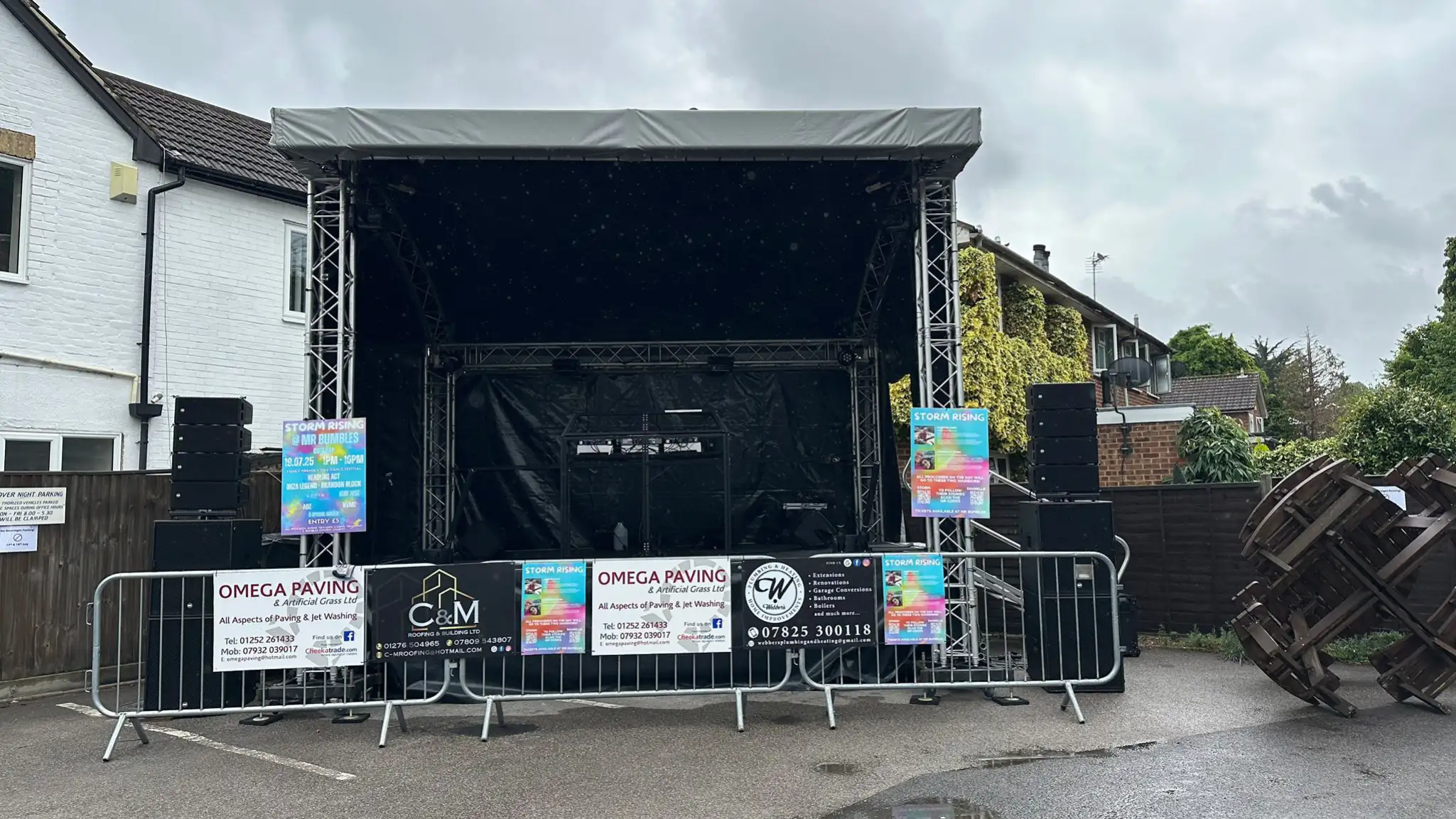
A festival stage is the focal point of your event.
It’s where:
It’s not just a platform.
It controls how your event looks and how it feels.
A strong stage setup makes everything else easier. A weak one makes everything harder.
This is where most people guess, and that’s where problems start.
The right stage size depends on three things:
A 4m x 4m or 6m x 4m stage usually works.
Good for:
A 7m x 6m or 8m x 6m stage is more realistic.
This gives:
You’re looking at:
At this level, it’s not just about size anymore. You’re dealing with:
Go too small and your event feels underwhelming.
Go too big and you waste budget.
This is one of the most searched questions, and most sites answer it badly.
Here’s the reality.
Cost depends on:
Bigger stage = more structure, more labour, more transport.
Access matters more than distance.
If setup is difficult, costs go up.
Grass, slopes, uneven surfaces all affect build time.
Quick turnaround = higher cost.
This is where costs really move:
A basic stage might start around a few hundred.
A full festival setup can run into thousands.
Another area people underestimate.
Small stages can go up in a few hours.
Larger festival stages:
This includes:
If your event starts at 12pm, setup doesn’t start at 9am.
It starts the day before.
Outdoor events always carry risk.
A proper festival stage should:
This is where cheap staging becomes dangerous.
If a stage isn’t rated properly:
Weather planning is not optional.
This is where most organisers get caught out.
A stage without sound and lighting is just a platform.
You still need:
Even a small event needs basic setup.
Larger events need proper production.
This is where the event either feels sharp or falls flat.

Most problems come from the same few mistakes.
Cheap staging often means:
Too small = poor visibility and bad experience.
People remember bad audio more than anything.
Rushing build = mistakes.
Weather, delays, missing equipment.
Things go wrong. You need to expect it.
A good setup should cover:
Everything should work together.
Not as separate pieces.
Choosing a stage is one thing, but making sure it actually works on the day is where most events fall apart. If the setup is rushed, the sound is poor, or the staging doesn’t fit the event properly, it shows straight away. At Beatz Hire, we handle staging, sound, and lighting together so your event runs clean, looks right, and feels organised from start to finish. If you’re planning an event, fill out the contact form below and we’ll help you get it set up properly.
Use our stage size guide for more detailed layout checks and the covered stage guide for outdoor planning. Beatz Hire also provides local stage hire in Reading, Oxford and Southampton.
Have a question or ready to get started? Let us know what you need, and our team will guide you every step of the way to make your event exceptional.
Reach out to us directly via email or phone—we’re here to assist you with any inquiries or bookings.
Stay connected and see our latest events, updates, and behind-the-scenes moments.


